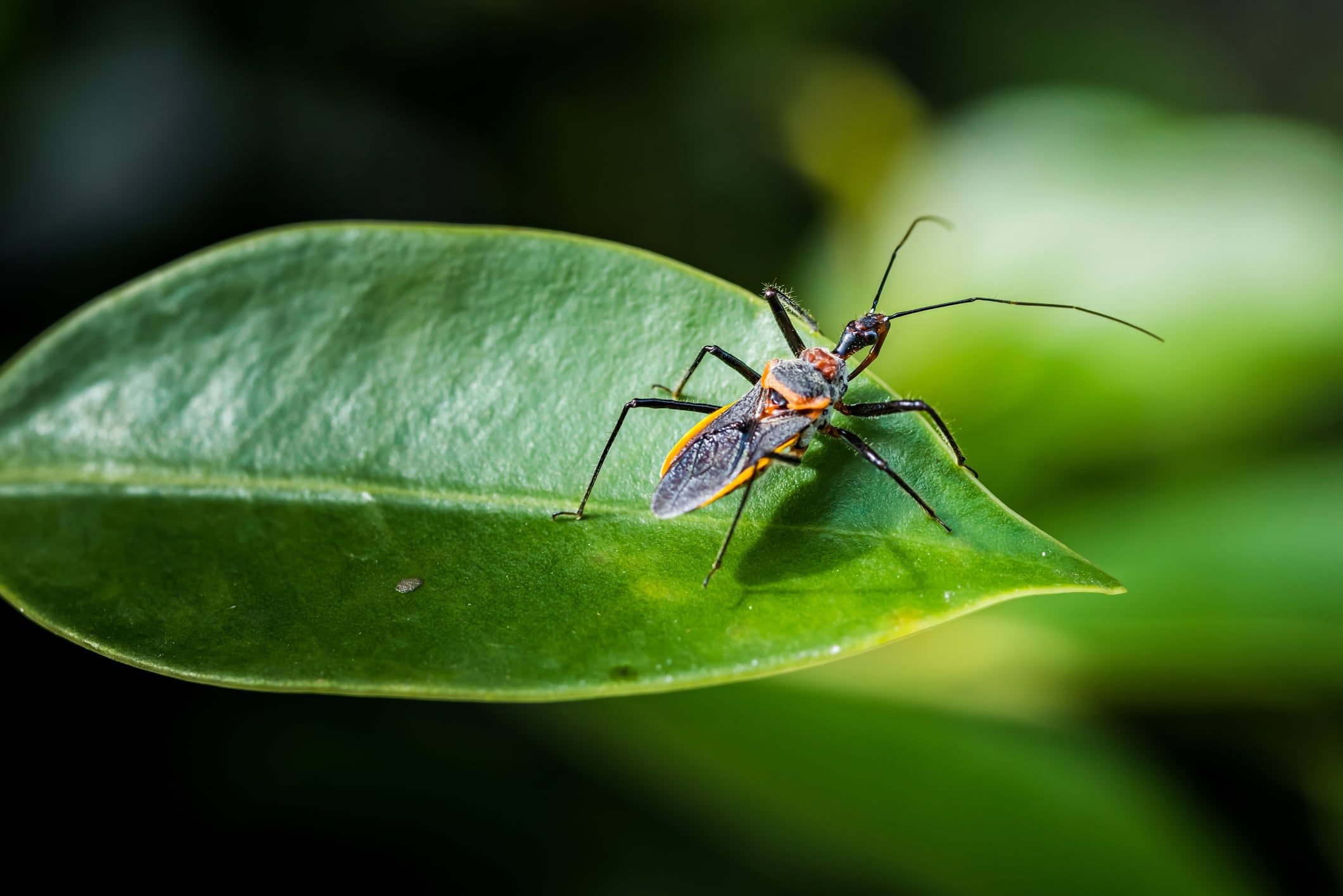
Learn All About the Predatory Assassin Bug
The Reduviidae family is a large family of bugs, made up of around 7,000 species. While most subfamilies don’t have any common names, some are typically known as assassin bugs and include groups known as ambush bugs, thread-legged bugs and even kissing bugs.
So, what exactly are assassin bugs and why are they called such? We’ll find out all about them in this blog!
What are assassin bugs?
Assassin bugs are characterised by an elongated head with a thin neck, and a curved straw-like beak. They can range in colour, from brown or black to orange, yellow or red. Assassin bugs live almost everywhere and can be found in a multitude of habitats, from gardens and fields to rainforests. You’ll find them across the Americas, Europe, Africa and Australia.
There are around 7-10 species native to the UK, and are typically seen as beneficial species that feed on other insects and act as a natural pest control. This includes the likes of the masked hunter (Reduvius personatus) that hunts silverfish and woodlice.

What makes the assassin bug a predatory species?
Assassin bugs are known for their hunting skills, hence their name! They have evolved to carry out a number of strategies that help them catch their prey.
They have a three-part mouthpart called a proboscis that is very strong and sharp, and can be used to pierce their prey and inject paralysing saliva. Not only this, but the salvia turns the insect’s insides into liquid, allowing the assassin bug to suck out the nutrients.
Research has also shown that assassin bugs have learnt to cover themselves in tree resin, to help catch their prey and stop them from slipping away.
Assassin bugs have been known to either ambush their prey or stalk it and wait for the right opportunity.
6 things you should know about assassin bugs
There’s much more to learn about this fascinating group of bugs. Here are some extra facts to uncover more about this family of insects!
- Some species of assassin bugs are known as kissing bugs (Triatominae) and are a blood-feeding species. They are known to bite people’s faces, but don’t worry, you won’t find any of them in the UK!
- Nymphs (hatchlings) can look very different from their adult stage. They are usually much smaller and wingless, but they can also differ in colour. They can change colour during the ageing process.
- Some species from the genus Acanthaspis have been known to stack the exoskeletons of ants on their backs, wearing them as a camouflage coat to confuse both predators and prey.
- Assassin bugs don’t typically grow more than 4cm in length, making them incredibly small but mighty creatures!
- It’s thought that assassin bugs first appeared in the fossil records during the Mesozoic era, over 100 million years ago.
- They can kill a cockroach in just 3-4 seconds.

Can you spot the two-spotted assassin bug at Blue Planet Aquarium?
The two-spotted assassin bug (Platymeris biguttatus), also known as the white spotted assassin bug, is one of the most recognisable species. It is native to Africa, measuring around 1-4cm long. You’ll notice that it has a black body with two distinct white spots, and yellow or orange bands on its legs. Nymphs do not have the spots, instead temporarily turning bright red as they grow and shed their skin, in order to warn enemies.
You can see these fascinating bugs with your very own eyes at Blue Planet Aquarium, behind safety glass of course! Our Venom exhibit is home to some of the world’s most incredible species, including the red lionfish, gila monster and of course, our assassin bugs.
So, next time you come to Blue Planet Aquarium, don’t forget to put your new knowledge into practice and impress your friends and family! You can book your tickets online and plan your visit in advance.


