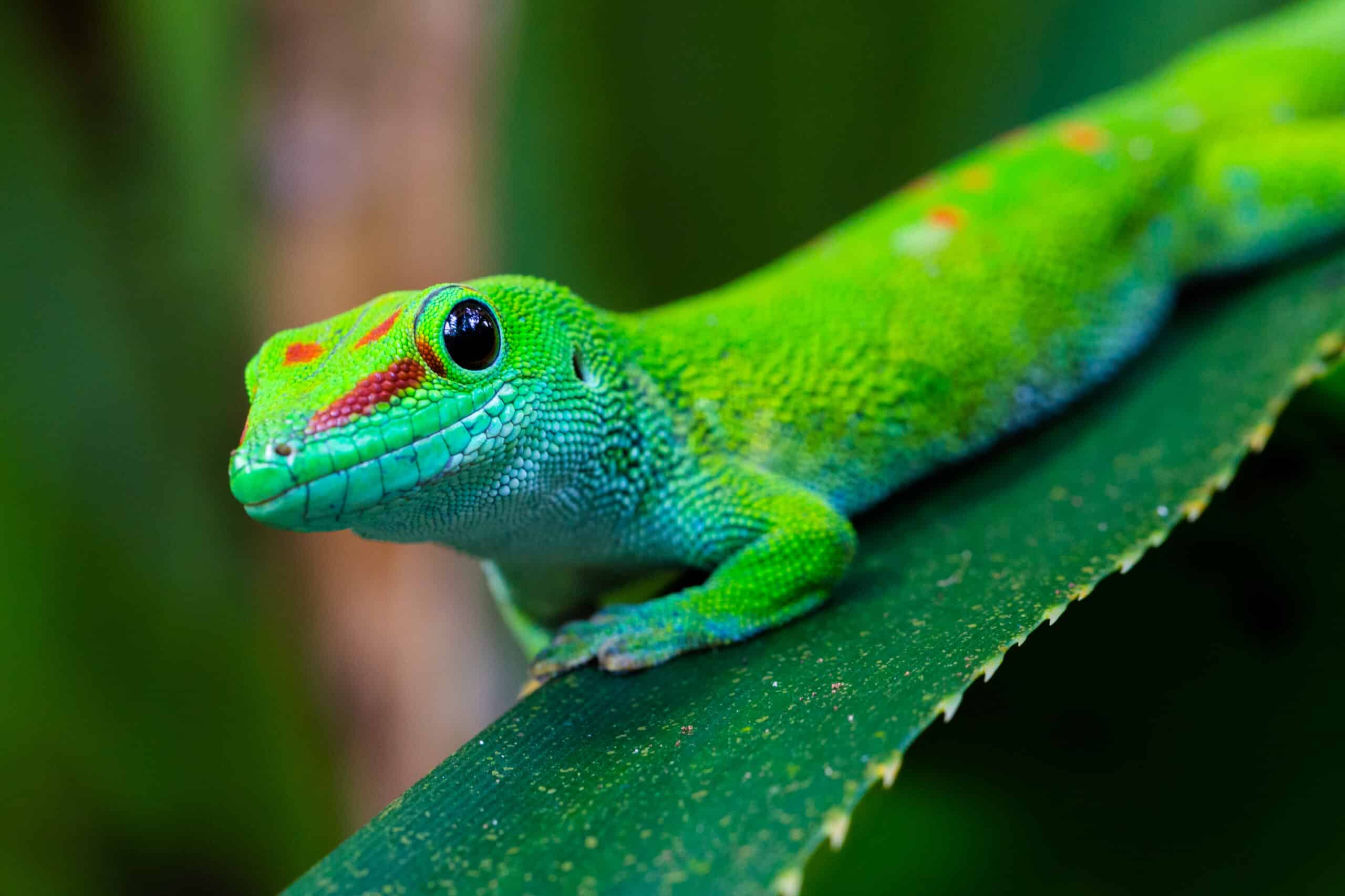
One of the largest day gecko species, the Madagascar giant day gecko (Phelsuma grandis) are identified by their brightly coloured bodies, as with other day gecko species. With around 70 different species of day geckos, the giant day gecko is native to eastern Madagascar and is part of the Gekkonidae family. Let’s find out all there is to know about this fascinating reptile and where you can see it for yourself at Blue Planet Aquarium.
Appearance and Key Features
The Madagascar giant day gecko is easily recognisable due to its bright green appearance, along with red or orange markings on its head and down its back. They are the largest of the day geckos, growing up to around 30cm in length. Males are typically larger and have broader heads than their female counterparts.
Just like many geckos, this species have flattened toe pads lined with microscopic hairs called setae, which allows them to scale even smooth surfaces like canopy leaves. They also have lidless eyes, and their skin is very delicate and covered in small, smooth scales.
Native Habitat and Range
As you may have guessed, the Madagascar giant day gecko is native to Madagascar, but specifically the tropical rainforests of the northern and eastern regions. They spend almost all their lives high in the canopy of the trees, meaning they are an arboreal species. They require a humid, tropical environment and thrive in dense foliage.
As well as Madagascar, populations of the gecko have also been introduced in places like Hawaii, Florida and Mauritius.
Conservation Status
According to the IUCN Red List, the Madagascar giant day gecko was last assessed in 2010 and is listed as Least Concern. The biggest threat to this species is habitat destruction and deforestation. In some cases, the giant day gecko is an invasive species and could actually increase threats to other gecko species.
Extra facts you should know
This vividly coloured giant day gecko is a fascinating species living high in the Madagascan rainforests, but there’s more to learn! Find out some of the additional facts about this species below.
- Madagascar giant day geckos are diurnal, which means they are active during the daylight hours.
- They are omnivores, meaning they have a very varied diet including insects and other small invertebrates as well as plant matter.
- This species is one of the few lizards that can vocalise beyond a hiss. They can make distinctive croaks, clicks, squeaks and barks to communicate different things.
- The Madagascar giant day gecko has a tail that’s just as long, if not longer, than their body. It’s a multi-purpose organ used for fat storage, balance and also defence from predators. They can detach their tail if it’s grabbed by a predator to distract it and escape.
- It’s thought the giant day gecko can live up for up 8 years.
Where to find us at Blue Planet Aquarium
If you want to come and see a Madagascar giant day gecko with your own eyes, you can right here in our Frog Zone exhibit, alongside our panther chameleon and axolotls!
One of the largest day gecko species, the Madagascar giant day gecko (Phelsuma grandis) are identified by their brightly coloured bodies, as with other day gecko species. With around 70 different species of day geckos, the giant day gecko is native to eastern Madagascar and is part of the Gekkonidae family. Let’s find out all there is to know about this fascinating reptile and where you can see it for yourself at Blue Planet Aquarium.

Type
Reptile

What do they eat
Omnivores, including insects and other small invertebrates as well as plant matter.

Size
Up to 30cm in length

Habitat type
Tropical rainforest

Where are we
Madagascar
