Wobbegong Shark Fact File
With its unique name and even more fascinating appearance, the wobbegong shark is a creature that’s certainly worth learning more about. So, whether you’re looking for how it got its name or how they behave, our blog post has all the information you need on this type of shark.
What is a wobbegong shark?
Wobbegong is the common name that’s been given to one of seven families of carpet sharks, under the order Orectolobiformes. Other families include nurse sharks, bamboo sharks and the whale shark.
Wobbegongs are incredibly distinctive looking, and it’s thought that wobbegong means shaggy beard in Australian Aboriginal. This should give you a little clue as to their appearance!
4 facts to know about the wobbegong shark
So, what is there to know about these intriguing sharks? From appearance to diet and even special adaptations to help them survive, we’ve got it all here.
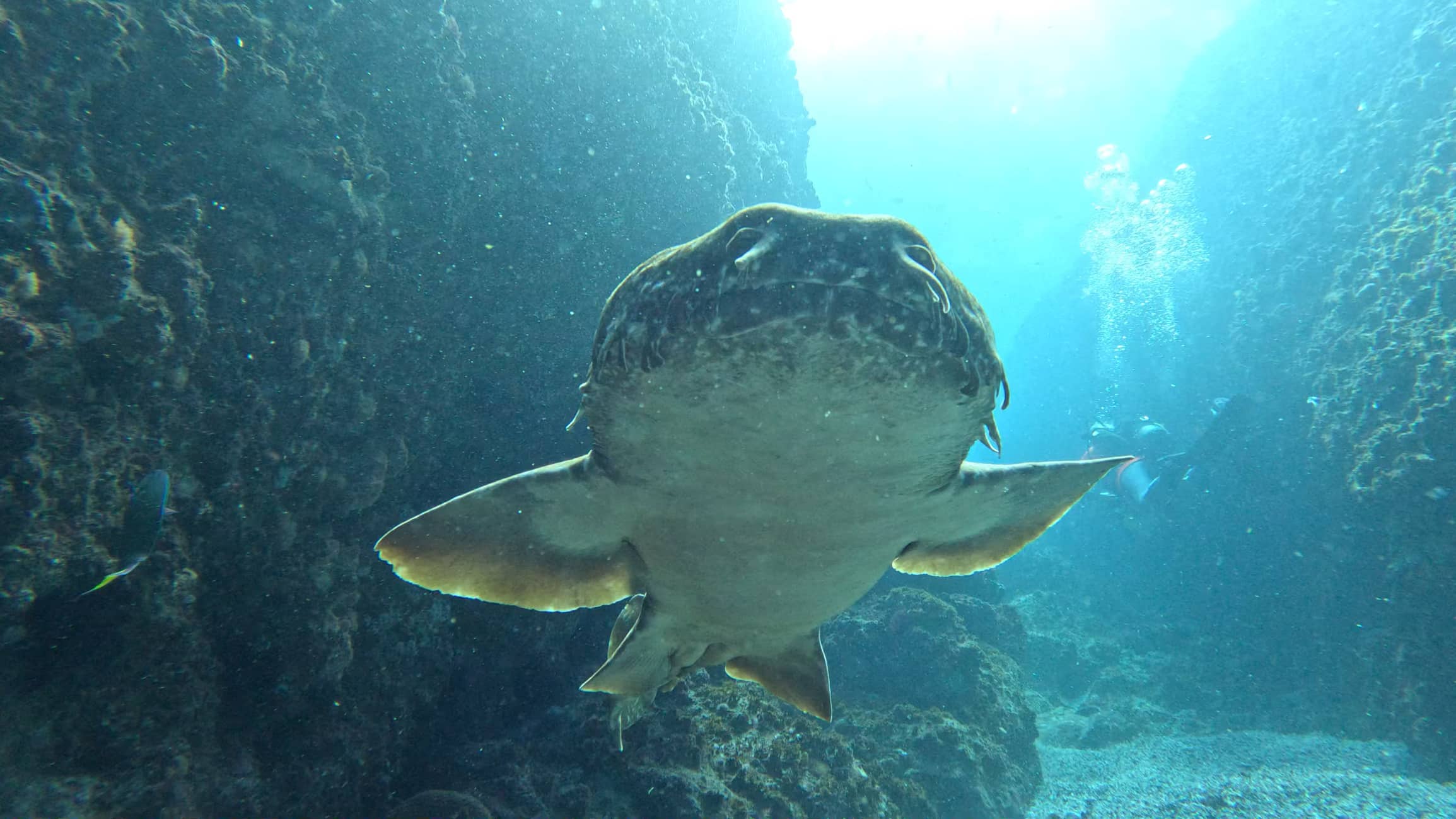
It has a distinctive appearance
The wobbegong is certainly not what you would think of when picturing a traditional shark, and it just goes to show how diverse ocean life can be. The wobbegong has a flattened body and wide head, covered in mottled patterns to help it camouflage against the ocean floor. It also has tassel-like appendages around its mouth and snout.

There are 12 species of wobbegong
There is thought to be 12 different species of wobbegong shark, with the spotted wobbegong (Orectolobus maculatus) being the largest. It can grow up to around 3 metres long. The smallest is the network wobbegong (Orectolobus reticulatus), only reaching lengths of around 52cm.
Most wobbegongs are endemic to Australia, with a few being found in the likes of Indonesia, Papua New Guinea and southern Japan. They are known to be bottom-dwelling sharks, spending most of their time along the sea floor.
Wobbegongs are carnivorous predators
Wobbegongs will eat the likes of reef fish, octopus, crustaceans and have even been known to eat smaller sharks. They are ambush predators and can sit motionless for hours just waiting for prey to come by. When it does, they strike fast and suck the prey in, with long needle-like teeth that point backwards to stop the prey from escaping. Some species will wave their tail to confuse fish too.
To really make sure they can capture their prey and enjoy their meal, some species of wobbegong are able to dislocate their jaw to swallow anything that’s a bit too big!

They have adapted to breathe while staying still
Unlike some other shark species, the wobbegongs don’t need to constantly move in order to breathe. They have developed an ability to pump water over their gills, using their cheek muscles. This is perfect for helping them perfect their ambush technique when hunting.
Are wobbegongs endangered?
According to the IUCN Red List, most species of wobbegong are currently classified as Least Concern. However, the Indonesian wobbegong (Orectolobus leptolineatus) is currently listed as Near Threatened with a decreasing population.
Some of the biggest threats to wobbegongs include the loss of their reef habitat as well as recreational catch.
Wobbegongs are important to coral reef science, as they are a good indicator for reef health. When wobbegongs begin to leave an area, it’s a clear sign that that the reef is going to go into decline.
Can you spot our wobbegongs at Blue Planet Aquarium?
Here at Blue Planet Aquarium we’re home to two species; the spotted wobbegong and Western wobbegong (Orectolobus hutchinsi). Be sure to keep an eye out for them on your next trip to us! Book your tickets in advance here.


