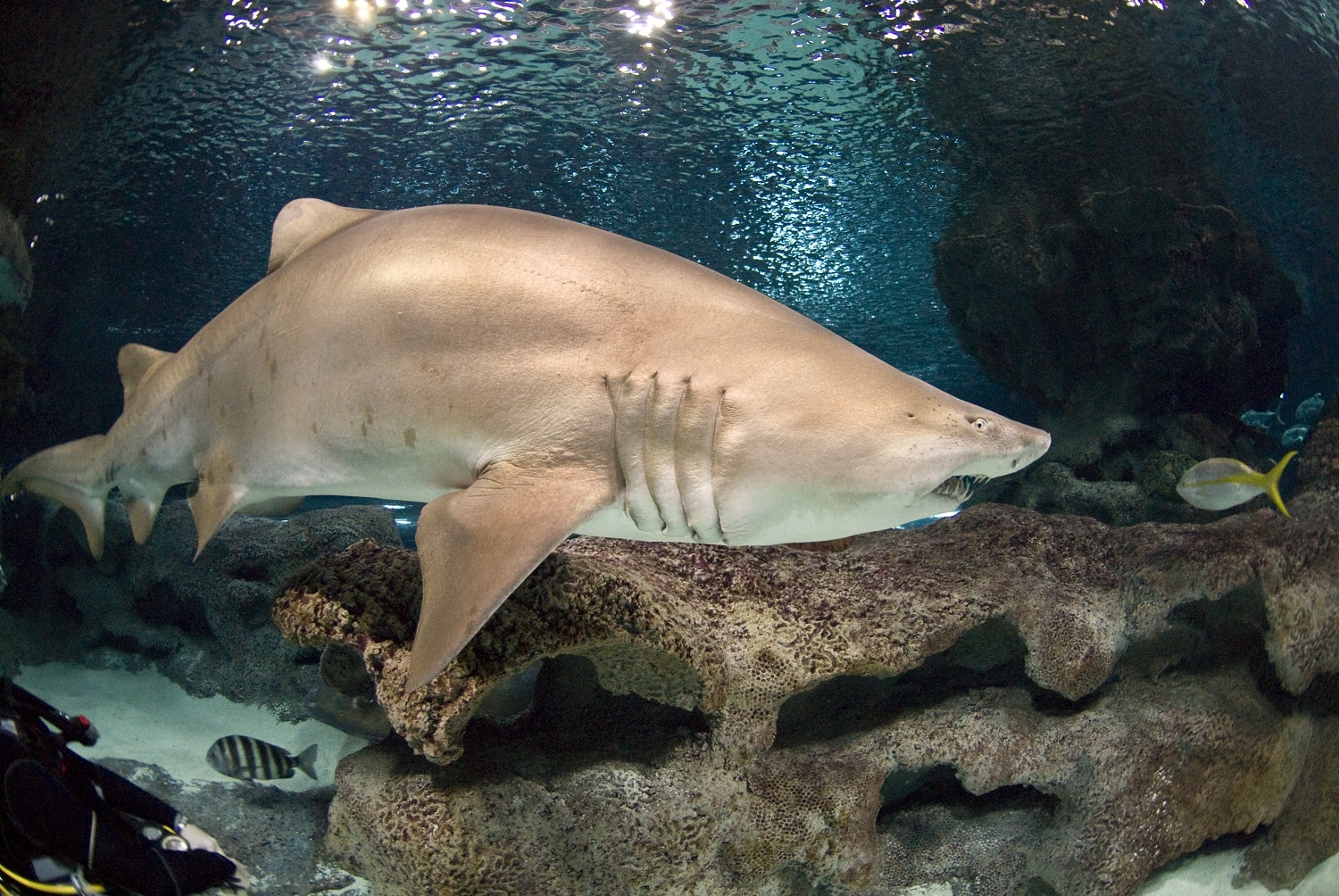
Where Do Sharks Live? Fun Facts About Shark Habitats
Sharks live almost everywhere, including all five of the Earth’s oceans, freshwater lakes, and even some rivers. Studies suggest that their geographic ranges are changing as a result of climate change, too, so we’re seeing more in UK waters.
Sharks are typically aggressive towards their own species and species they compete with for resources, but pose only a small risk to humans. They’re also an integral part of the marine ecosystems that they inhabit, helping to control prey, protect coral reefs, and prevent overgrazing of precious marine flora.
Let’s take a closer look at where these amazing creatures live, along with their preferred marine habitats.
Where exactly do sharks live?
Sharks predominantly live in oceans, including the Pacific, the Atlantic, the Indian, the Southern, and the Arctic. They’re also found in freshwater lakes and rivers, as well as brackish water bodies like estuaries.
Sharks are technically found in all the world’s oceans, because they’re migratory and respond to changing water temperatures, so they generally don’t stay in one location for any great length of time.
It’s worth adding, too, that humans have influenced shark migration patterns over time. Pollution, bycatch, and habitat destruction pose a real risk to shark numbers, driving these animals to seek refuge beyond their usual swimming and hunting grounds. What’s more, around 70% of open-ocean pelagic shark populations have actually decreased.

Where can sharks live? Water temperature classification
There are over 500 species of sharks in our oceans, each with its own preferences and behavioural traits. So, to distinguish them, sharks are classified by the surface temperature of the water in which they inhabit.
The three major classifications are:
- Tropical: Sharks in tropical waters, such as the great hammerhead and the nurse shark, inhabit ocean regions near the equator.
- Polar: These sharks live in oceans near the polar ice caps and have adapted to survive in frigid waters that are only a few degrees above freezing. Examples of polar sharks include the black dogfish shark and the Greenland sleeper shark.
- Temperate: Temperate sharks live between polar and tropical regions. Some species, like the great white shark and the basking shark, may venture out of the temperate ocean zone and migrate to tropical waters. However, most temperate species tend to stay within regions where the water temperature is more comfortable, avoiding drastic changes in either direction.
As climate change continues to affect sea temperatures, sharks are changing their migration behaviour. For instance, temperate species are drifting polewards towards the north and south, venturing into colder and deeper waters. That’s why we’re seeing an increase in some types of shark species in the UK.
What types of habitats do sharks live in?
Different sharks prefer different habitats, even if rising water temperatures and continued marine destruction are affecting the limits of their normal range. So, let’s take a closer look at the various habitats that sharks prefer, including species examples.
Open ocean
Over 300 million cubic miles of the ocean are classified as the “pelagic zone”, and sharks that live in this area have adapted to become swift swimmers to catch prey.
The shortfin mako shark, in particular, is an especially fast-moving species that thrives in the open ocean. It’s been observed reaching a swimming speed of 50 mph, making it the speediest shark in our seas.
Deep ocean
Did you know that the average depth of our oceans is around 2.5 miles? That’s equivalent to 3,688 metres – the total length of 35 football pitches, straight down into the depths.
Small wonder, then, that the deep ocean supports some very unusual species, including sharks. It’s reputed that 50% of all 500 known species of sharks live in the deep ocean, including the unusual-looking goblin shark. There may even be unidentified species lurking in the depths – we’ll leave it to the experts to go looking for those.
Coral reefs
Gray reef sharks, Caribbean reef sharks, and zebra sharks tend to live near coral reefs, feasting on the diverse marine life found in these invaluable marine habitats.
As alluded to earlier, sharks play a critical role in maintaining and preserving reef systems. They feed on species that would pose a threat to coral if their numbers weren’t kept in check, so they’re a vital part of the reef ecosystem.

Sandy plains
Angel sharks, great hammerhead sharks, and saw sharks thrive in sandy plains, sniffing out prey like small fish and crustaceans even when they’re buried in the mud or sand.
Sandy plains refers to the area before the continental shelf, while abyssal plains are the area after the continental shelf (3,000+m depth). It’s thought that these account for over 50% of the total ocean floor. That means that plain-dwelling sharks have no shortage of space in which to swim.
Rocky coastlines
You may not think of a rough, rocky coast as the most hospitable environment for sharks. But a diverse variety of species live beneath the surface, meaning a steady food supply for the resident apex predator.
Typically, spiny dogfish sharks, great white sharks, and scalloped hammerhead sharks are attracted to these regions. They feed on seals, penguins, seabirds, and other coast-dwelling marine life.
Estuaries
Estuaries attract a surprising number of shark species, including sandbar sharks and lemon sharks. Known for their brackish water (a mix of salt and freshwater), estuaries are used as a breeding ground by many species of fish, including salmon and sea trout. Hence, they’ve naturally become an all-you-can-eat buffet for opportunistic predators seeking a reliable source of food.

Freshwater
As mentioned earlier, most people don’t think of sharks as freshwater-dwelling creatures, but they do exist in some lakes and rivers. Bull sharks will enter freshwater to reproduce, with their young living in estuaries to avoid larger saltwater predators.
Other than that, several shark species have been observed living full-time in the freshwater rivers of Australia and Southeast Asia. These are known as true river sharks and include the northern river shark, the speartooth shark, and the Ganges river shark.
Shark habitat behaviours
Sharks have a unique relationship with the marine habitats in which they live, exhibiting behaviour that distinguishes them from other species.
Of course, being apex predators, sharks almost always sit at the top of the food chain. This is particularly true of large shark species, though even they are occasionally preyed upon by orcas.
Sharks may be feared by humans, but they play a truly critical role in marine habitats. They prey on fish that would otherwise cause environmental destruction, helping to maintain precious ecosystems like coral reefs.
Note, too, that sharks are usually most active at night and in the twilight hours. That’s because their prey is also most active, so they seize the opportunity to score an easy catch.
Unlike some species, sharks are not territorial. They travel wherever they can find a reliable source of food, with large species swimming up to 50 miles per day in search of their next meal.

Are shark habitats in danger of destruction?
As alluded to earlier, sharks are exposed to habitat destruction like any other marine animal. Even their status as non-territorial apex predators can’t safeguard them against continued habitat loss at the hands of humans.
Don’t forget that many shark species are endangered. In many cases, this is a direct result of human encroachment, with overfishing, marine pollution, and warming ocean temperatures contributing to a decline in their numbers.
It’s now known that 37% of shark and ray species are listed as threatened with extinction by the IUCN (International Union for Conservation of Nature). And if the effects of climate change continue, this number is likely to increase in the future.
What sharks live in the UK?
More than 40 species of sharks are thought to live in or visit the UK, from bottom-dwelling species like the lesser-spotted dogfish to colossal ocean-dwelling species like basking sharks, which migrate through UK waters along their time-tested feeding routes.
Other sharks often seen off UK coasts include blue sharks, thresher sharks, and the speedy shortfin mako we mentioned previously. Rare species that occasionally frequent our waters are thought to include the Greenland shark and the deepwater dogfish.
Wondering about great white sharks? Don’t worry – there have been no reported sightings of great white sharks in UK waters. However, should ocean temperatures continue to rise, we may see these animals visiting our shores in the future.
Experience the beauty of sharks at Blue Planet Aquarium
Did you know that Blue Planet Aquarium is home to the largest collection of sharks in the UK? Our exhibits include 11 unique shark species, from the brownbanded bamboo shark to the western wobbegong.
Brave enough for a closer look? Join our marine specialists for a captivating shark dive, and look forward to a thrilling up-close encounter with our sand tiger sharks, nurse sharks, and blacktip sharks.
So, now you know where sharks live, why not pay them a visit at Blue Planet Aquarium? Book your tickets today.


