Learn all about the Pelican: 9 Must Know Facts and Statistics
Pelicans are something to behold, their vast wingspan and powerful bill appearing like something from a different age. But, there’s more to these magnificent birds than sheer size alone, as we’ll explore today.
From its preferred habitat to its crafty method of catching a meal, we’ll showcase all that’s great about this wonderful bird.
What is a pelican?
A pelican is a type of large water bird, most recognisable for its long beak and large pouch under its throat. They belong to the genus Pelecanus, and there are 8 species that are found around the world. These species are split in two distinct groups; ground nesters and tree nesting species. Despite being aquatic birds, they are strong fliers.
The pelican species are found in North America, the Caribbean, Australia and Eurasia.
What do pelicans look like?
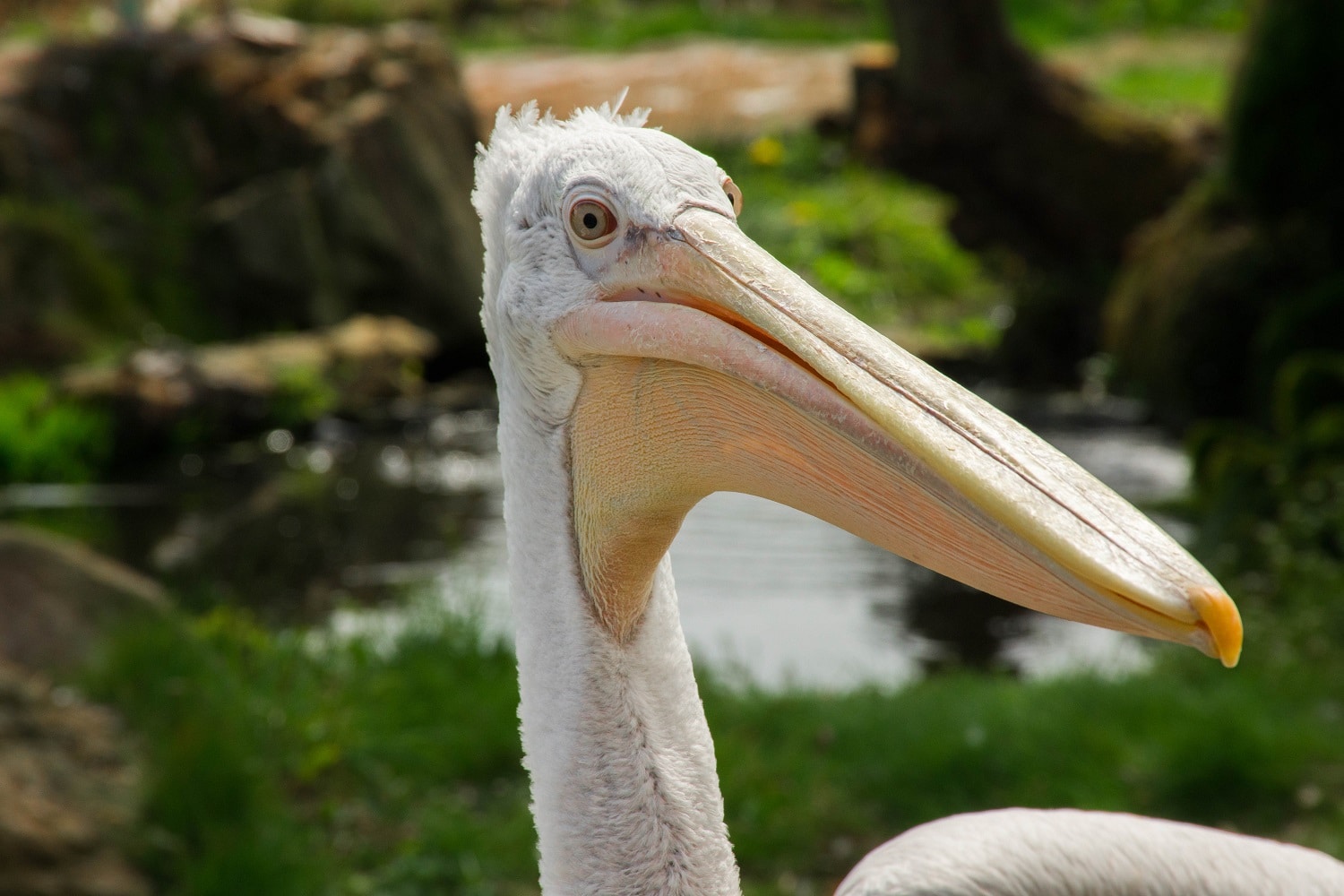
As we mentioned, pelicans are most well-known for their enormous beaks – with the Australian pelican having the largest of any bird. Underneath their large beaks, you’ll find the gular pouch. This pouch acts like a fishing net, scooping up prey when they dive beneath the water’s surface.
Alongside their long beaks, they’re also known for their large wingspan. In the Dalmatian pelican, which is the largest species, their wingspan can reach just over 3 metres.
Their legs, however, do not grow to be very long. Their short legs are tipped with webbed feet that have four toes, one more than most birds. Their feet are great for swimming, but they’re also important for landing, too, acting as breaks.
Pelicans are typically white, such as the American, Australian, Dalmatian and Great White species, but other species are grey/brown. Their feathers often have black flight feathers, with yellow or pink throat pouches. These pouches can turn red or orange during breeding season.

4 must-know facts about pelicans
These birds are truly fascinating, and there’s much more to learn about them! Here’s some must-know facts about pelicans.
Pelicans have existed for over 30 million years
Archaeologists in Egypt discovered a nearly complete 36-million-year-old tibiotarsus (leg bone) that looks almost identical to a modern pelican’s bones. While not concrete proof, it strongly suggests that pelicans have existed for well over 30 million years.
The Australian pelican has the longest bill
The Australian pelican has the longest bill of any bird in the world, which can reach up to 50cm in length. In general, pelicans use their bill to catch fish, draining the water before swallowing their meal. The American white pelican can hold up to 3 gallons of water in its bill!
Pelicans are social birds
Pelicans will typically travel in flocks, and breed in groups called colonies. A group of pelicans is usually called a pod or a scoop. As a group, they’ll swim in a line or a U shape to drive fish into shallow waters, making them easier to catch.
They eat more than just fish
While pelicans do mostly eat fish, they will also consume amphibians, insects and even other birds. Their diet is solely meat, making them a carnivore. They have been known to eat frogs, turtles and shrimp too.

See Dalmatian Pelicans at Blue Planet Aquarium
Here at Blue Planet Aquarium we have our very own Dalmatian pelicans, giving you an incredible opportunity to learn more about this magnificent creature. You can see them for yourself in our Pelican Cove exhibit.
Want to know more before you come and visit us? Here are some unique facts about the Dalmatian pelican.
- The Dalmatian pelican can grow up to 1.8 metres in length – that’s 5ft9. The average height of a man in the UK.
- Their wingspan is even more impressive. At over 3.5 metres, they rival that of the wandering albatross. Which is widely considered to have the largest span of any bird on Earth at 3.7m wide.
- To put their 3.5-metre wingspan into perspective, that’s roughly the same length as a family hatchback.
- Dalmatian pelicans weigh an average of about 12 kilograms. This might not sound like much, but it’s about the same weight as a fully-grown dachshund!
- Despite migrating vast distances throughout Europe and Asia, Dalmatian pelicans usually return to the same breeding grounds over multiple years.
Sadly, Dalmatian pelican numbers are falling rapidly, undergoing a particularly rapid decline in the 20th century. The IUCN red list has the Dalmatian Pelican listed as “near threatened”. This signals a very real risk of extinction in the coming decades.
Biologists estimate around 10,000-20,000 are left in the wild. With about 3,500 breeding pairs. What is so troubling about the decline in their numbers is that it’s unique to this specific species; similar animals, like the great white pelican, have seen nowhere near as steep a decline over the past century.
There are many factors that impact Dalmatian pelican numbers, including habitat loss, hunting, and killings by fishermen who believe they’re a threat to their livelihood.

We hope you’ve enjoyed learning about one of the world’s most impressive birds, the great Dalmatian pelican. We’re proud of our work in helping to safeguard this incredible species; why not visit us at Blue Planet Aquarium and get up close to these magnificent animals in Pelican Cove? Book your tickets now to experience the wonder of the oceans and the creatures that call it it home.


