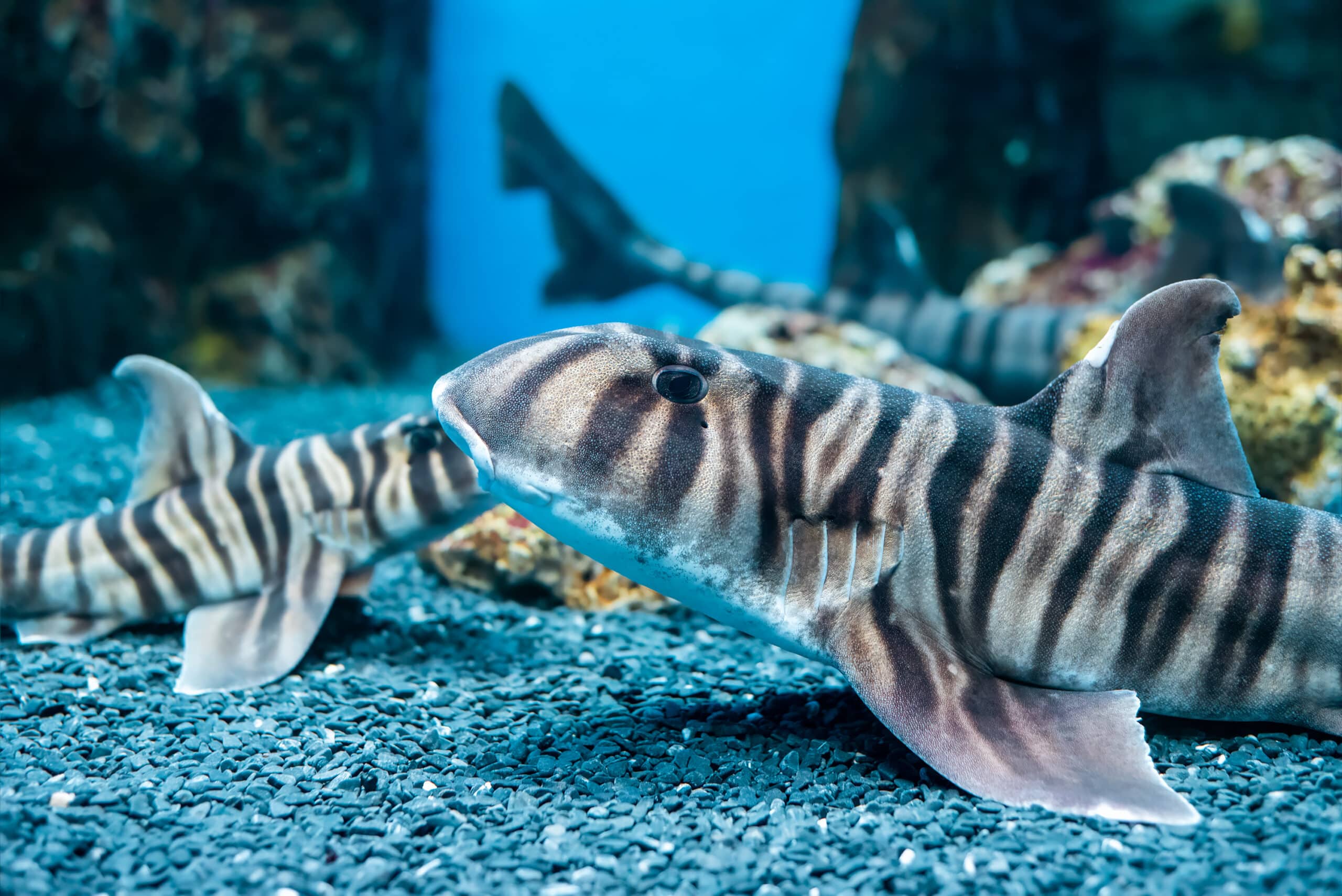
Get ready to meet one of the most stylish residents of our aquarium! The zebra bullhead shark (Heterodontus zebra), also commonly known as the zebra horn shark, is a fascinating member of the bullhead shark family. Unlike their more famous cousins, these sharks are small, docile, and arguably the best-dressed fish in the sea.
Native habitat
The zebra bullhead shark is native to the Indo-West Pacific, frequently found cruising the continental shelves off the coasts of China, Japan, and Australia. The zebra bullhead shark is native to the Indo-West Pacific, frequently found cruising the continental shelves off the coasts of China, Japan, and Australia. They are bottom-dwellers by nature, preferring to spend their time in relatively shallow tropical waters. To survive, they tuck themselves into rocky crevices or hide among coral reefs during the day, coming out when the sun goes down to explore the sea floor.om-dwellers by nature, preferring to spend their time in relatively shallow tropical waters. To survive, they tuck themselves into rocky crevices or hide among coral reefs during the day, coming out when the sun goes down to explore the sea floor.
Diet
These sharks primarily hunt for a variety of shellfish, crustaceans, and molluscs. They are experts at sniffing out crabs, shrimps, and sea urchins, as well as snails and clams that think they are safely hidden beneath the sand.
To help them enjoy their favourite snacks, zebra bullhead sharks have developed a unique dental setup that acts as a built-in toolkit. While their front teeth are sharp for grabbing slippery prey, their back teeth are flat and molar-like, making them perfectly suited for crushing through the toughest shells. This specialised dual-purpose mouth allows them to eat nutrient-rich prey that other sharks simply can’t crack open.
Appearance
Identifying a zebra bullhead shark on your next trip to Blue Planet Aquarium is easy once you know what to look for, starting with its famous “zebra” look consisting of narrow, dark vertical stripes set against a pale cream or white body. They possess a very distinctively blunt, pig-like snout and two high dorsal fins, each of which features a sharp defensive spine at the front to keep them safe from larger predators. These sharks are relatively small and manageable for our divers to monitor, typically reaching lengths of about 120cm when fully grown.
You can also spot some incredible evolutionary adaptations if you look closely at their eyes, which lack a nictitating membrane (a “third eyelid” found on most sharks) but feature prominent ridges above them that give the species its “Bullhead” nickname. Their thick, sturdy pectoral fins are also crucial to their behaviour, as they often use them to “walk” along the seabed rather than swimming through open water.
Conservation Status
Currently, the zebra bullhead shark is classified as Least Concern by the IUCN. However, like many reef species, they face threats from habitat destruction and accidental bycatch in commercial fishing nets.
You can learn more about how we work to protect our oceans on our Conservation Page.
Discover More: Fun Facts about Zebra Bullhead Sharks
There’s even more to learn about zebra bullhead sharks. Let’s take a look at just a few fun facts…
- Unlike many sharks that give birth to live young, these sharks lay spiral-shaped, leathery egg cases (often called “mermaid’s purses”) that wedge perfectly into rock crevices!
- Zebra bullhead sharks aren’t built for speed. They prefer “walking” along the seabed using their pectoral fins rather than swimming long distances.
- It’s clear that these adaptations have worked because bullhead sharks are some of the oldest shark lineages still swimming today, with ancestors dating back nearly 200 million years.
Want to dive deeper into the world of sharks? Check out these fact-filled blogs for more deep-sea secrets!
You can spot our zebra bullhead shark lounging in the sandy shallows of our Reef Exhibit within the Ocean Exhibit. Keep an eye out during our daily feed talks, where our experts share even more secrets about these striped wonders! If you love the zebra bullhead shark, don’t forget to visit their cousins, the Port Jackson sharks, located just around the corner.

Type
Shark

What do they eat?
Sea urchins, crustaceans and molluscs

Size
1.2 meters

Water type
Subtropical and Temperate Waters

Where are we?
Western Pacific and Indian Oceans
