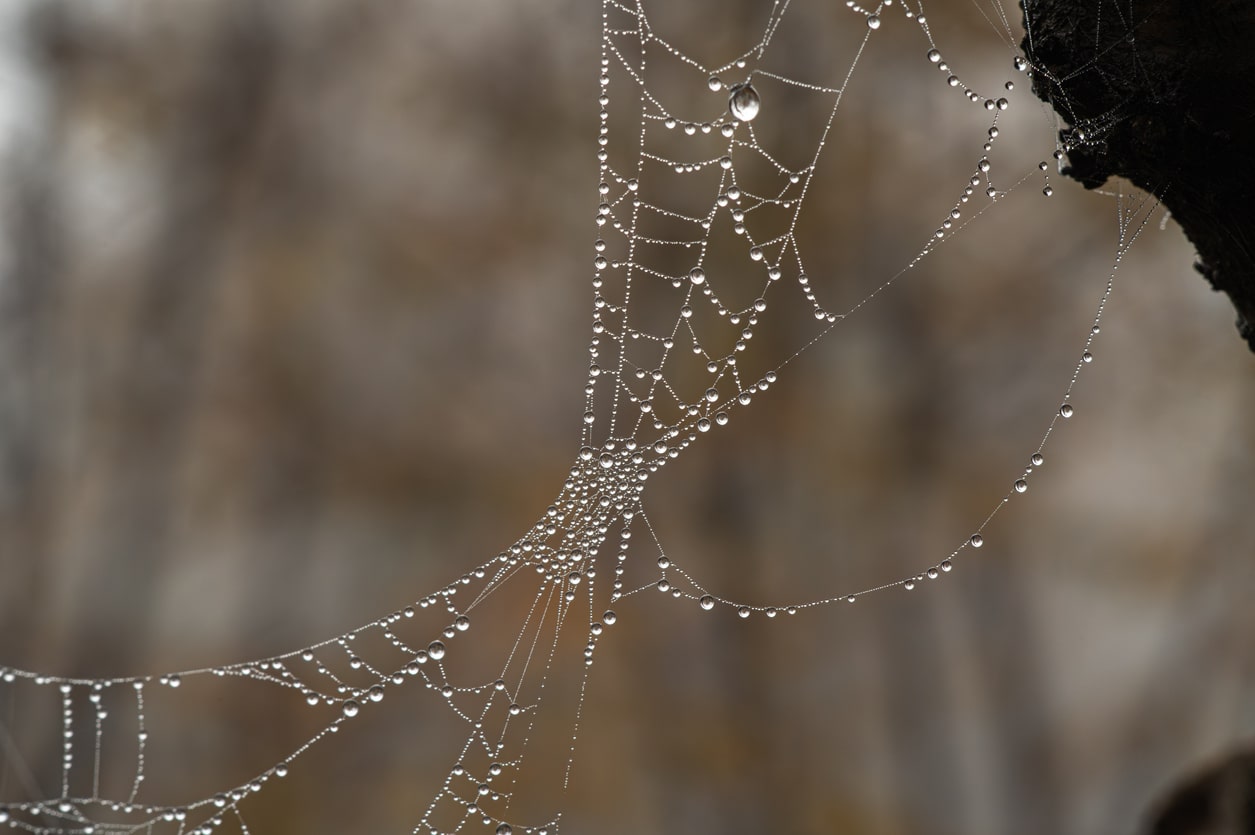
Why Do Spiders Make Webs?
Spiders are some of the most fascinating creatures in the natural world. Belonging to the arachnid class (Arachnida), spiders are members of the order araneae, they’re famous for their eight legs, impressive hunting skills, and, of course, the ability to produce webs made of silk. This silk is one of nature’s most remarkable materials, used by spiders for everything from building shelters to catching prey.
Not all spiders create webs, but the species that do rely on them for survival. In this guide, we’ll explore what spider webs are, how spiders build them, why they’re important, and how you can identify different web types.
What is a spider web?
A spider web is a structure made from spider silk. It is a strong, flexible, protein-based material produced in silk glands located inside the spider’s abdomen. This silk is secreted through tiny nozzles called spinnerets, and depending on the species, a spider may produce multiple types of silk, each with different strengths, stickiness, and elasticity.
Some silks are sticky and used for trapping prey, while others are non-sticky and ideal for building strong frames or wrapping egg sacs. This versatility is why spider webs come in so many shapes and styles.
Types of spider webs
Spiders are remarkable architects, capable of building different types of webs depending on their species and lifestyle. Common web types include:
- Orb webs: These are the classic wheel-shaped webs you often see in gardens. Created by orb-weaver spiders, they consist of a radial frame with spiralling sticky threads designed to catch flying insects.
- Sheet webs: Sheet webs are a dense, horizontal layer of silk made by sheet weavers. Insects fall onto the web, where the spider waits underneath to strike.
- Tangle webs: Also known as cobwebs, these irregular and messy webs are formed by comb-footed spiders. They rely on unpredictable threads that entangle prey.
- Funnel webs: These webs are shaped like a tunnel with a narrow retreat space at one end. The spider waits inside the funnel, darting out when prey lands on the surrounding web.
Lacywebs: Delicate and ornate, these webs look almost decorative. They are created by certain species that rely on intricate patterns to catch small insects.
Spider web identification guide
Spider webs can tell you a lot about the species that built them.
Each type of web has unique features, shape, density, texture, and purpose. By learning the differences between them, you can better understand the spiders around you and identify which species might be living nearby. The poster below visually breaks down the common web types to help you recognise them in the wild or at home.

How do spiders spin webs?
Web-building is a remarkable behaviour that begins long before a single thread is laid down. While the exact method varies by species and web type, the general process follows these steps:
1. Finding the right location
Spiders choose web-building sites based on wind direction, prey activity, available anchor points, and shelter.
2. Creating the bridge line
To begin, a spider releases a silk thread into the air. When it catches onto a surface, the spider reinforces it, forming the first structural line, which is the foundation of the whole web.
3. Building the frame
Once the bridge line is in place, the spider creates additional support lines, forming a framework that can withstand tension, wind, and the movements of captured prey.
4. Adding radial lines
From the centre, the spider builds outward, creating radial spokes like the spokes of a wheel.
5. Spinning the spiral
A temporary spiral may be built first as a guide, followed by the final sticky spiral designed to catch insects.
Environmental considerations
There’s also a number of factors that affect where a spider will make a web, or whether it’s worth even building a new one.
Weather
Wind, humidity and temperature all affect web structure.
Predators and prey
Positioning is strategic to avoid threats and maximise hunting success.
Silk efficiency
Spiders conserve silk by repairing webs rather than rebuilding complete structures.

Why do spiders spin webs?
Many, but not all, spiders spin webs. Those that do rely on them for several key survival purposes:
Food
Webs are highly effective hunting tools. The sticky threads trap insects, allowing the spider to immobilise and eat them.
Protection and raising young
Some spiders use silk to build protective retreats or create nurseries for egg sacs and offspring.
Travel
Certain species use silk to “balloon”. This is a process where they release a silk thread that catches the wind, allowing them to travel long distances. This is more common in spiderlings when they are leaving the nest, though possible for some small species as adults, it is far less common.
Courtship
Male spiders often use silk to signal females or wrap food offerings to attract mates.
Do all spiders spin webs?
No, all spiders can produce silk, but not all use it to build webs. Many species, such as wolf spiders or jumping spiders, hunt their prey actively. They may use silk to create egg sacs, safety lines, or shelters, but they don’t rely on webs to catch food.
Tarantulas, for example, do not create aerial webs. Instead, they use silk to line their burrows, create moulting mats, or reinforce hiding places.
Spot spiders at Blue Planet Aquarium
Blue Planet Aquarium is home to a variety of spider species. Our arachnid displays allow visitors to get up close to these extraordinary creatures, learning more about their habitats and lifestyles.
If you’d like to see some of these incredible species in person, book your trip to Blue Planet Aquarium to explore our spider exhibits and learn more about these fascinating arachnids.


