The Extraordinary Fish of Lake Malawi: Africa’s Freshwater Phenomenon
While most travel to Africa for lions, zebras and hippos. Those in the know would tell you it’s also one of the best places for safaris of a different kind. Because, amid the landlocked wilds of Malawi, you’ll find one of the world’s most diverse and precious freshwater lakes. The inimitable, invaluable Lake Malawi.
It’s impossible to overstate the natural significance of Lake Malawi. The fourth-largest freshwater body in the world. Hosting over 1,000 species of fish, with new discoveries happening seemingly every other week. Also, it isn’t just the sheer volume of species which impresses. The lake is a goldmine for biodiversity. Also, most of its inhabitants are only found in Lake Malawi.
To celebrate this natural treasure, we’ll look at what makes it so special. We’ll also discuss our wonderful Lake Malawi exhibit. Where you can experience the beauty of this great African lake right here at Blue Planet Aquarium.
What is Lake Malawi?
Lake Malawi is the fourth-largest freshwater lake in the world, boasting an incredible array of biodiversity. It’s located in the East African Rift Valley, bordering Malawi, Mozambique, and Tanzania. Thanks to its immense size, the waterway is one of Africa’s Great Lakes.
The lake is a staggering 365 miles (587 km) long and 52 miles (84 km) wide, or about the size of Belgium!
The lake was formed from the rift valley subsidence, the splitting of the African tectonic plate, creating the Nubian and Somali plates and opening up space for a vast amount of water and wildlife to fill.
In recognition of its exceptional biodiversity, part of the waterway was designated a UNESCO World Heritage Site in 1980. Despite this, its unique fish stocks are in decline. Overfishing, invasive species and a growing population are affecting its diversity and native species.

How Many Species of Fish Are There in Lake Malawi?
Lake Malawi is no ordinary lake. It’s home to an incredible diversity of life, with over 1,000 species of fish (and counting) in its waters. That’s more species than the lakes and rivers of Europe combined.
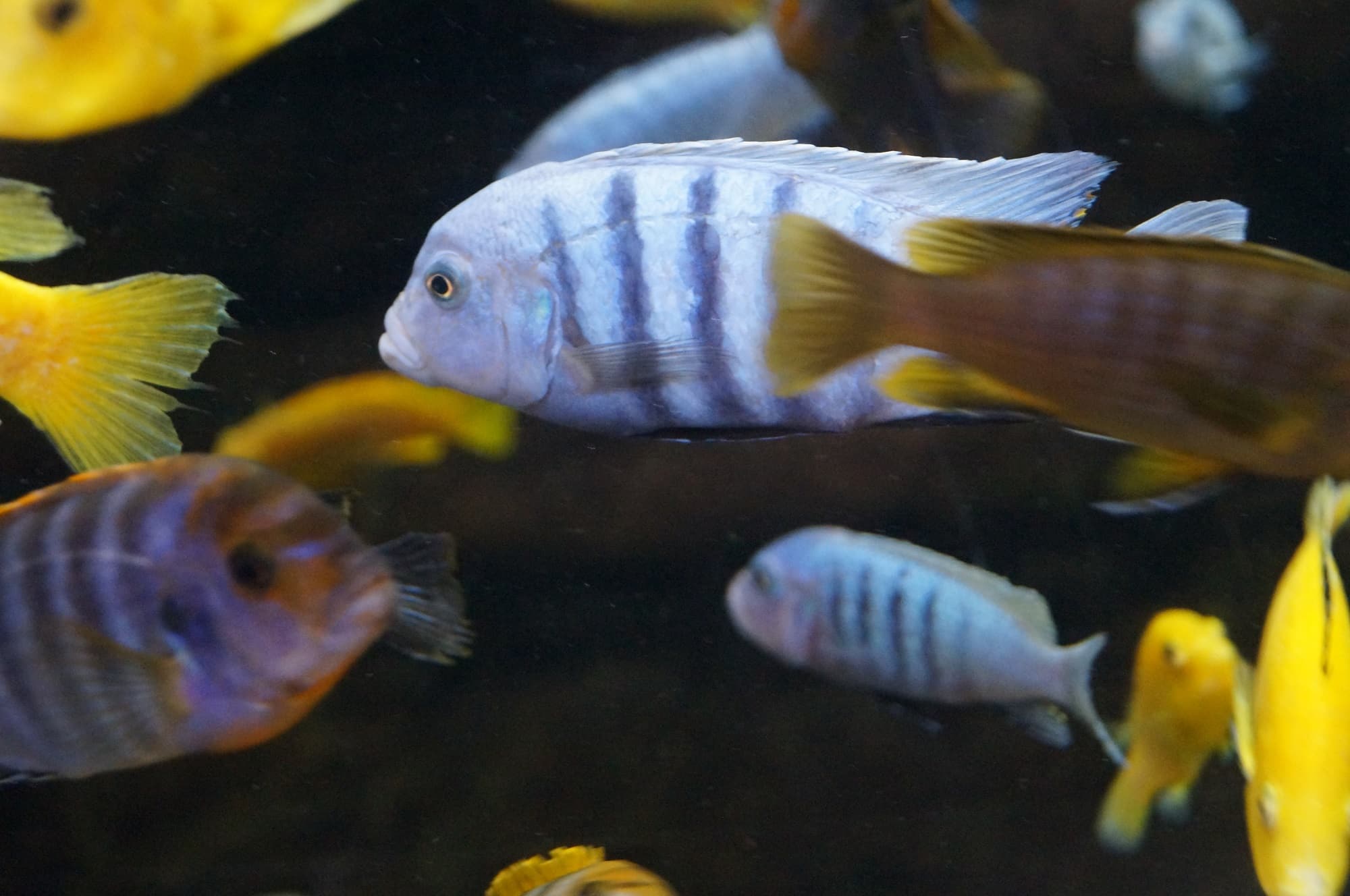
Cichlids
Cichlids (Cichlidae) are a type of freshwater fish found in rivers and lakes from Latin America to Africa. Currently, there are around 1,650 known species of cichlids. Though biologists estimate that there could be thousands more yet to be discovered.
In Lake Malawi, there are believed to be over 1,000 species of cichlids, occupying over 90% of the lake, so they’re not difficult to spot!
The rate at which cichlids evolve and generate new species is dizzying. A trait rarely found in any other species group on Earth. It’s estimated that a new species of cichlid is produced every 20 generations. This means their diversity in water bodies such as Lake Malawi continues to grow.
Tigerfish
Tigerfish (Hydrocynus vittatus) are a silver-coloured fish known for their sharp teeth that resemble a tiger’s. They have a slim body, but are sometimes confused with piranhas, despite looking quite different.
Catfish
Catfish (Siluriformes) are a broad order of animals with over 3,000 known species worldwide, with seven of those species being native to Lake Malawi. These fish are easily identifiable by their whisker-like barbs that are on their face.
Some species of catfish found in Lake Malawi are able to breathe air at the surface of the lake using a specialised organ called a labyrinth organ.
The diverse range of marine life found in Lake Malawi can’t be summed up in just one blog. On top of the incredible animals we’ve already discussed, there are also animals above the surface, such as the Nile crocodile (Crocodylus niloticus), hippos (Hippopotamus amphibius), and 100 species of water birds.

Are Lake Malawi’s Fish Endangered?
Sadly, despite the rapidity at which cichlids evolve and the region’s status as a protected heritage site, Lake Malawi is suffering. Now, 1 in 10 fish in the lake are classified as endangered, with overfishing the greatest threat to its unique diversity and ecosystems.
Over the past two decades, the human population has doubled on the banks of Lake Malawi. This has led to a dramatic rise in overfishing. Something which is not only damaging the fragile ecosystems within the lake. But also, leading to a drop in the size and diversity of its rare species.
And overfishing isn’t the only threat to the lake’s native wonders. Pollution and agriculture are also damaging unique habitats and biodiversity. While invasive predatory species, like the Nile perch, now pose a significant threat to the future of the lake’s endangered inhabitants.
Thankfully, conservation work is ongoing, with biologists in the region doing an excellent job of bolstering local understanding of the lake’s natural value. Large parts of Lake Malawi are now protected. In these protected areas, fish numbers and diversity are recovering rapidly.
Experience Lake Malawi at Blue Planet Aquarium
At Blue Planet Aquarium, we’ve long recognised the beauty and diversity of Lake Malawi. Prompting us to create a special exhibit to showcase the lake’s spectacular and rare species. Within our wonderful Lake Malawi exhibit, you’ll have the opportunity to see countless species of cichlids. Which offers you a glimpse into the unique variety, colour and appearance of these beloved fish.
As well as enjoying the wonders of Lake Malawi, you can also learn more about the region’s diverse species and habitats as part of a daily talk and presentation by our in-house experts. This is a great opportunity to gain insight into the value of Malawi’s freshwater fish stocks, as well as the ongoing conservation work in place to safeguard their numbers.
We hope you’ve enjoyed this guide to Lake Malawi and its extraordinary biodiversity. If you’d like to see the amazing life Lake Malawi is home to, book your tickets to Blue Planet Aquarium today!


